Porcelain Veneers in Traverse City, MI

Maybe it's a chipped front tooth you cover with a closed-lip smile, or discoloration that whitening never quite reached, or a gap you stopped mentioning years ago. Whatever the concern, porcelain veneers are thin ceramic shells bonded to the front of your teeth that can address all of it in one course of treatment, with a result that looks like it simply grew there.
Dr. Christopher Mazzola and the team at Traverse Dental Associates have been designing smiles here in Traverse City at a practice that has served Grand Traverse County for four generations. That longevity comes with a consistent philosophy: keep as much of your own healthy tooth as possible, plan the smile around your face rather than a shade chart, and build something meant to last.
Veneers are one part of our broader cosmetic dentistry care, and they often pair naturally with treatments like teeth whitening or a full smile makeover. Call us at (231) 947-0210 to set up a consultation.
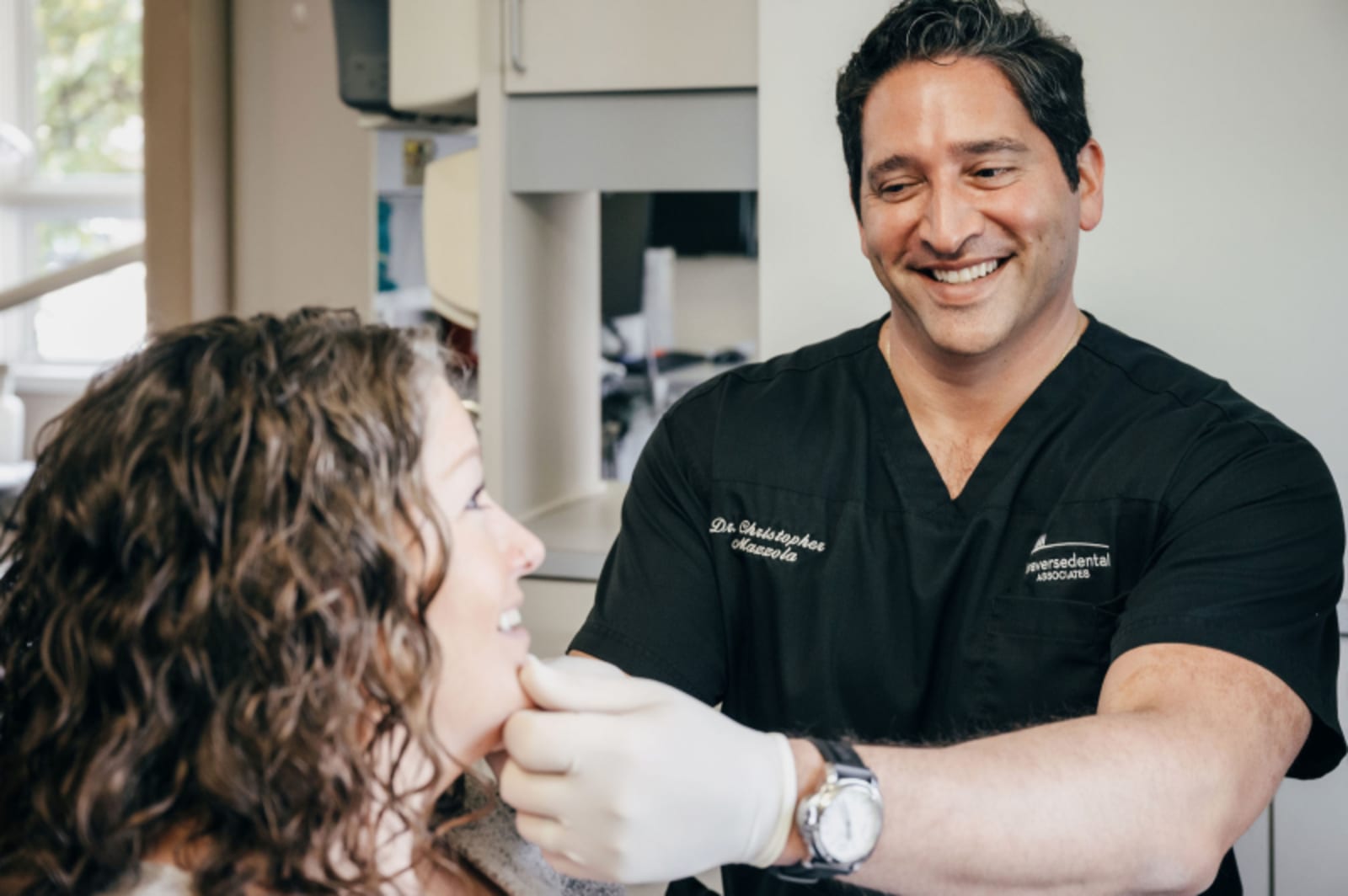
Every step in this process gets explained before it happens, so you always know what to expect and why.
Before any instrument comes near a tooth, we sit down and talk. We want to know what bothers you when you look in the mirror, and what you'd want a photo of yourself to look like. This conversation is where the smile actually gets designed, and it's the part we refuse to rush. It's also how our four-generation practice has always started, because knowing people before treating them has always mattered more to us than moving quickly.
Because veneers sit in a working mouth, we evaluate far more than just the front eight teeth. We look at how your teeth meet, whether you clench or grind, the health of your gums, and how your smile relates to your lips and face.
This facially driven approach is what determines the right length, width, and shape for your veneers, and it's also how we catch a bite problem that could shorten the life of beautiful porcelain before it ever becomes one. If the exam turns up a jaw joint issue, we'll talk through TMD treatment before any porcelain is ordered.
A thin, measured layer of enamel is removed so the veneer sits flush against your tooth rather than bulking it out. We take only what the design requires, nothing more. The preparation is done with local anesthetic, and most people are genuinely surprised by how uneventful it feels.
Impressions or digital scans capture your exact tooth shapes and the agreed dimensions, and those records go to the ceramist who handcrafts your veneers. Temporaries are placed the same day, so you leave looking like yourself and get to test-drive the shape and feel while the final set is being made.
We try the veneers in before anything is made permanent, check them in natural light, and give you a chance to look and weigh in. Once you're happy, they're bonded into place and the bite is carefully adjusted until everything feels comfortable, not just until it looks right.
One of the most practical things about veneers is that they address several concerns at once. Stains, chips, small gaps, and mildly uneven teeth can all be corrected together in a single course of treatment, rather than as a series of separate procedures spread across months.
Veneers work best for adults whose teeth are structurally sound and whose gums are healthy, but who are unhappy with how their smile looks. If your concerns are cosmetic rather than structural, you are likely in the right conversation.
Typical reasons people come in asking about them include:
Some situations call for a different starting point, and that is worth understanding before moving forward. Active decay or gum disease is always treated first. If a tooth has lost a large amount of structure, a crown will protect it better than a veneer. Significant crowding or rotation often gets a more conservative result from clear aligner therapy first, sometimes followed by fewer veneers once the teeth are in a better position.
If you clench or grind heavily, we want to understand what is driving that before placing porcelain into a mouth under heavy load, and we will often recommend a night guard to protect the finished work. That is exactly what our TMD treatment visits are built around. None of these are refusals. They are simply the order in which things need to happen for the result to last.
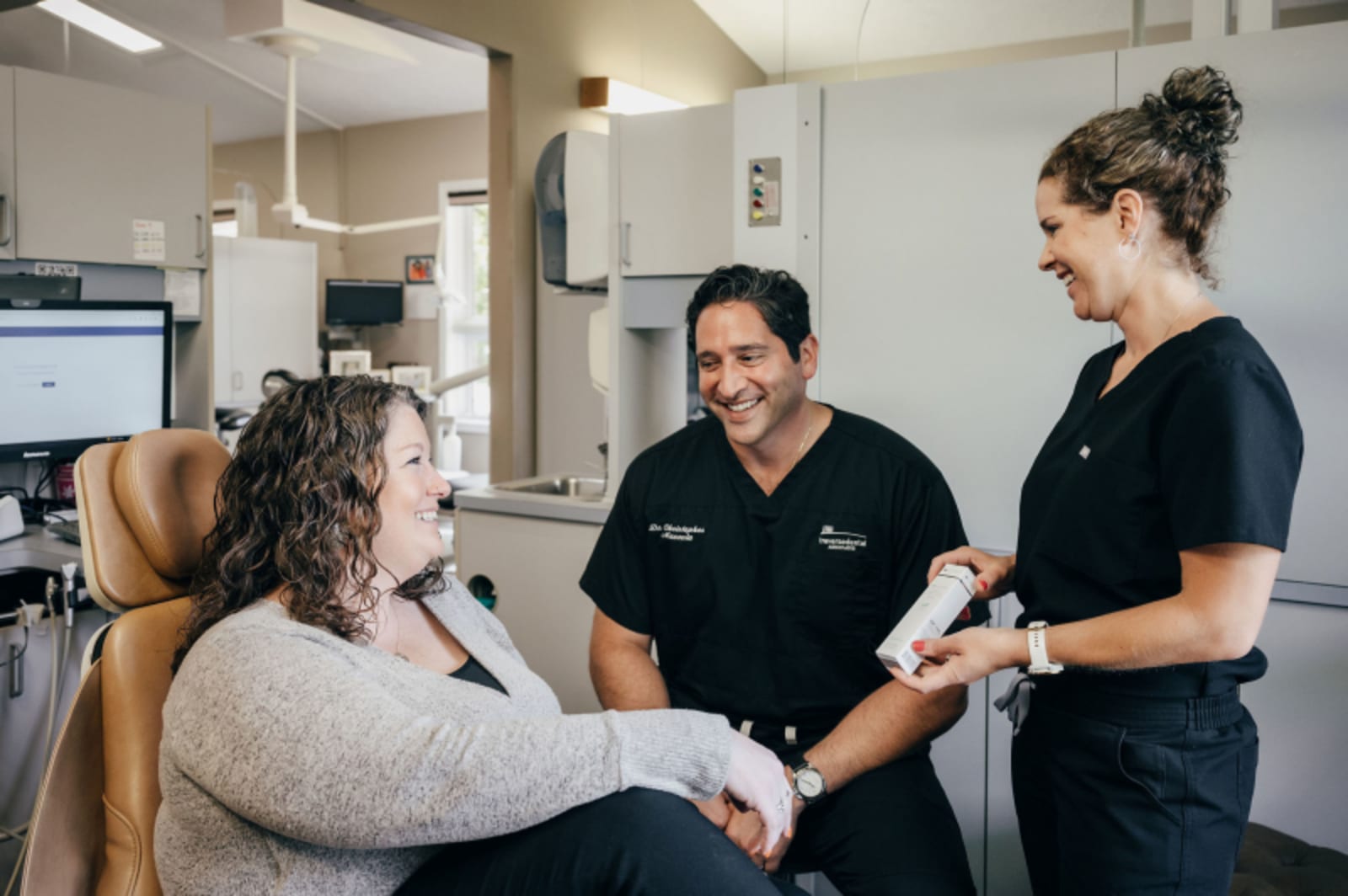
This is one unhurried appointment where we talk, take photos, and examine your teeth, gums, and bite together. By the time you leave, you'll have a clear sense of whether veneers are the right fit for your situation and what the plan would actually involve.
This is a longer visit where we prepare the teeth, take the records the lab needs, and place your temporaries all in one appointment. You'll leave looking like yourself and can head straight back to work, dinner, or photos the same day.
Your ceramist spends a couple of weeks building each veneer by hand, and during that time you'll be wearing your temporaries. If the length or fullness feels off, let us know and that feedback goes directly to the lab before your final set is made.
We try the veneers in before anything is permanent, check them in natural light, and give you a chance to look and approve them. Once you're happy, they're bonded into place and the bite is carefully adjusted until everything feels comfortable and natural. Most people are finished in this one visit.
A short check a week or two later gives us a chance to confirm your gums have settled and your bite feels right. It is a quick visit, but it is one of the more important ones for making sure everything is settling the way it should.
Getting ready for veneers is mostly a matter of conversation and good hygiene. Before your preparation appointment, gather photos of smiles you find attractive, and if you have older photos of your own smile, bring those too.
Any outstanding cleaning, fillings, or gum treatment should be completed first, and if you know you grind your teeth, mention it early in the process rather than waiting until the day your veneers are delivered.
Once they're in place, caring for veneers is very close to caring for your natural teeth, with a few habits worth leaving behind. Here's what makes the biggest difference long term:
Veneer fees depend on the number of teeth treated, the complexity of your bite and gum architecture, whether any preliminary work is needed, and the lab artistry involved in each veneer. Because a single chipped tooth and a ten-unit smile design are genuinely different projects, we don't quote a blanket number online.
What we do instead is provide a written treatment plan with the full cost after your consultation, before you've committed to anything. Since veneers are cosmetic, dental insurance typically doesn't contribute, though we'll tell you plainly if any portion of your plan might be an exception.
We'll walk through payment options at that same appointment, and there's no expectation that you decide the same day.
Dr. Christopher Mazzola, Dr. VanHorn, and Dr. Christina Mazzola all treat veneer cases, and you can read more about each of them on our meet the team page.
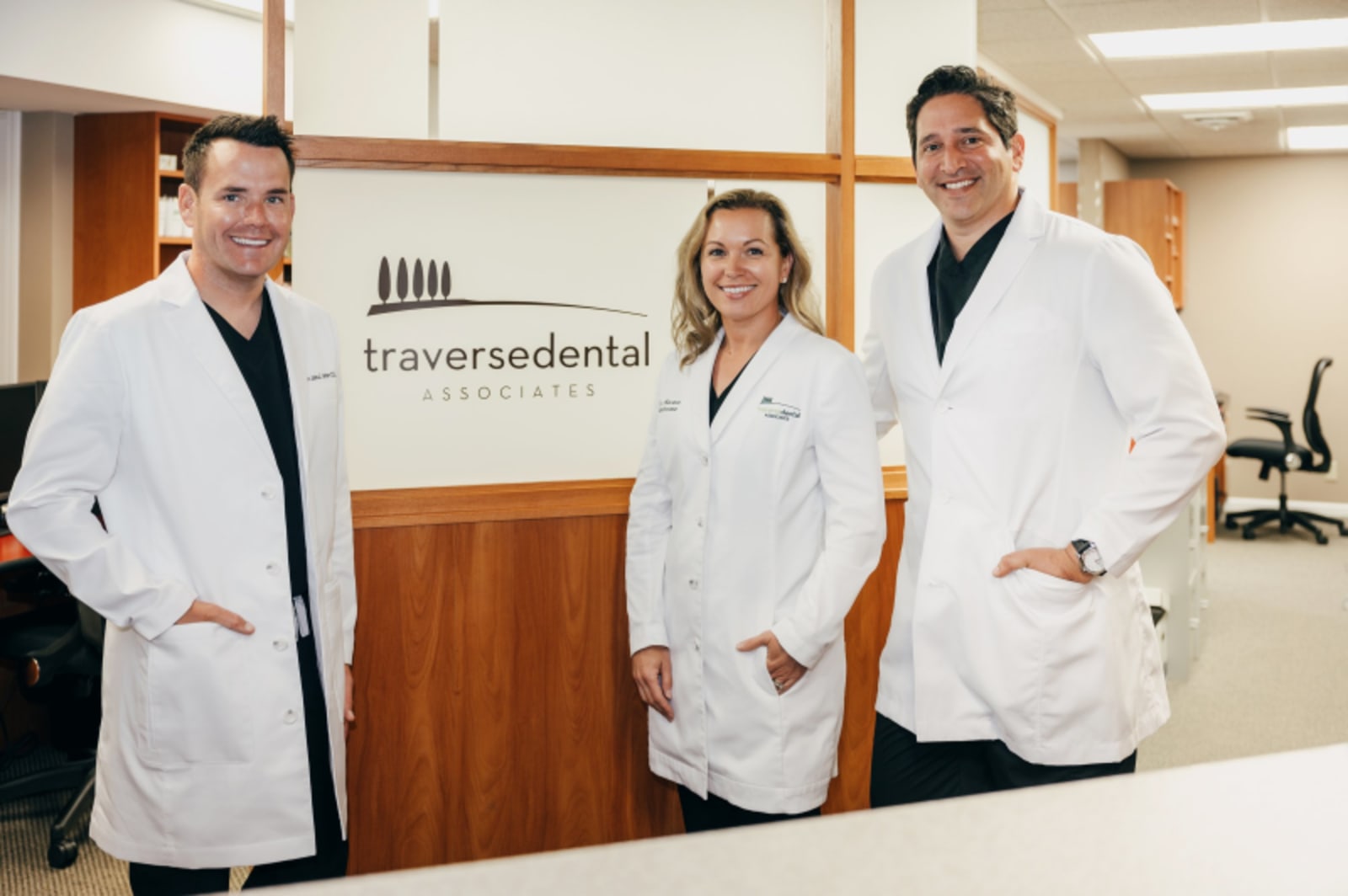
This practice has been in one family for four generations. Dr. Christina Mazzola's great-grandfather, then her grandfather, then her uncle, and now she and her cousin Dr. Christopher Mazzola run it together.
When you stay in one community that long, it changes how you practice. You see your work at year five, year twelve, year twenty, at the grocery store and at your kids' soccer games, and that kind of accountability is exactly where our emphasis on long-lasting dentistry comes from.
Dr. Christopher Mazzola leads our comprehensive and esthetic dentistry, and Dr. Lumbrezer, our Comprehensive Cosmetic Dentist, is one of the clinicians you may sit down with when you come in about veneers. If you're comparing your options, here are a few things about this practice that are worth knowing:
No, but they do change them permanently. A thin layer of enamel is removed so the veneer fits flush, and enamel doesn't grow back, which means the tooth will always need to be covered by something afterward. The tooth itself stays alive and functional underneath. We keep the preparation as minimal as the design allows and show you exactly what's planned before we start.
Only if they're designed that way. Shade, length, surface texture, and translucency are all chosen with you, and porcelain handles light much like enamel. Wearing temporaries shaped like your final veneers is a genuine preview, and we adjust based on what you tell us during those couple of weeks.
The preparation appointment is done with local anesthetic, and most people describe it as easier than expected. Mild sensitivity to cold for a few days afterward is common, and it fades. If dental appointments are a real source of dread, we offer oral and IV sedation and can plan the visit around that from the start.
For a small chip on one tooth, composite bonding is quicker, less expensive, and requires little to no enamel removal. Porcelain wins on stain resistance, surface polish, and lifespan, so it's the better tool when you're changing several teeth or correcting color and shape at the same time. We'll tell you which one fits your situation when you come in.
They can visually correct mild rotation and small gaps. For meaningful crowding, moving the teeth with clear aligners first is more conservative and often reduces how much porcelain you need afterward.
Call us and we'll see you. A veneer that has come loose can frequently be re-bonded; a fractured one is replaced. Either way, we look at why it happened, because a veneer that fails early is usually telling us something about the bite or a grinding habit that needs addressing.
If there's something about your smile you've been sitting with for a while, we'd genuinely like to hear it.
Tell us what you'd change, and we'll walk you through what's possible, what it would take, and whether veneers or something more conservative would serve you better in the long run.
Our cosmetic dentistry team is here weekdays from 7:30 to 4:00 at 555 S Garfield Avenue in Traverse City, and you can reach us anytime at (231) 947-0210 whenever you're ready to start that conversation.
We look forward to meeting you. Call 231-947-0210 to set up your first visit. We'll be in touch soon.
